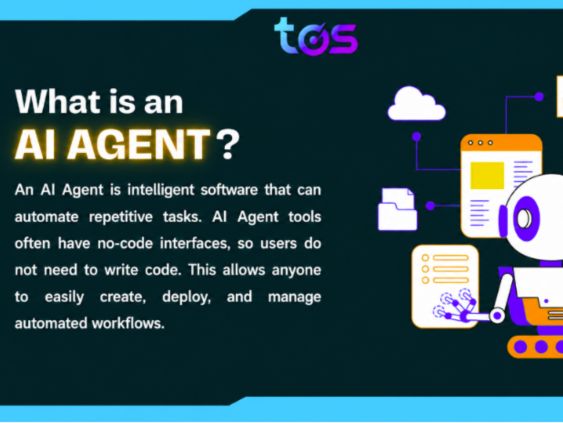



Continuing our series on Performance Marketing, this part will explore another rapidly developing aspect fueled by the continuous growth of data and technology – particularly in the field of Digital Marketing. Today’s topic will be the role of technology in Marketing, or more precisely, Marketing Automation.
Overview of Marketing Automation
The general definition of marketing automation can be answered in many different ways, easily found in any search results. Simply put, marketing automation is the integration of software, technology, and data into daily marketing strategies with the goal of maximizing the productivity and effectiveness of campaigns.
Similar to most other industries, the explosion of technology and data has brought continuous innovation opportunities to the marketing field. From large volumes of user data, content personalization, advanced analytical techniques, AI, and machine learning, businesses need to innovate their campaigns. In just the last 10 years, the development of marketing tools has been enormous in the Asian market in particular and the world in general. You may have heard of major CRM brands like Hubspot, Salesforce, or top-of-mind email marketing companies like Mailchimp, or more familiar names in measurement such as Google Analytics and Appsflyer. All of these have gradually become indispensable for creating highly effective marketing campaigns.
Above all, the greatest strength when building technology projects is the ability to achieve accomplishments far beyond what humans can do. The top benefits of Marketing Automation include:
- Personalizing the customer experience: Using data on customer interactions and journeys to build personalized scenarios and interactive content.
- Automating marketing activities: Using technology to automate marketing activities, ensuring speed and accuracy – email, SMS, inbox, supporting data aggregation, keywords, and real-time competitor comparison, etc.
- Optimizing advertising effectiveness: Using machine learning tools to analyze, recommend, and optimize multi-channel advertising campaigns.
Overall, we can clearly see the impact of digital tools on marketing, where customer interaction data is becoming the most valuable asset. In the next section, we will delve into the classifications and common uses of marketing automation.
Popular marketing automation tools
Let’s delve deeper into the common types of marketing automation tools used in the digital marketing industry. Generally, these tools can be categorized into the following branches:
- Based on the customer funnel or intended use.
- By marketing channel/type
1. Classification by funnel
One of the most common, and almost universally prevalent, ways to categorize marketing automation tools is by selecting and sorting them according to the customer funnel.
As mentioned in the previous article on the customer funnel, every marketing team needs to clearly define the customer funnel that is appropriate for their business. The next step is to determine the strategies, content, communication channels, and approaches to optimize effectiveness throughout that journey. Finally, to maximize the efficiency and value of customer data, marketers will need to choose the right technology tools for their campaigns.
The typical customer funnel we use goes through stages of building brand awareness, attracting attention, consideration, then converting into customers, and further to loyal customers with significant revenue and word-of-mouth. Looking at it more broadly, businesses can divide activities into two main groups, and these are also the two simplest ways to categorize tools – Acquisition (attracting new customers) and Retention (retaining existing customers).
Acquisition: The primary goal of this funnel is to create awareness and acquire customers. This means that the tools in this funnel must be efficient, reach a large number of customers, test various content, and meet the set goals in order to minimize the cost of acquiring new customers (CAC). Common types of tools at this stage include:
-
- Hubspot: A leading CRM for businesses with specialized modules ranging from customer care and marketing to analytical reporting, supporting diverse customer service scenarios for continuous interaction and customer acquisition.
-
- WordPress, Wix: Tools that help build and optimize websites extremely quickly.
-
- MOZ, SEMRush: Tools that support keyword research, development, and optimization, helping marketers be more effective when implementing Google search ads and SEO.
-
- Hotjar, CrazyEgg, Google Analytics: A suite of tools for measuring and evaluating website performance.
-
- Facebook ads, Google ads, Zalo ads, and other advertising booking platforms: Platforms that support marketers in deploying automated ads to the right target audience through effective machine learning systems are also considered an indispensable component in the customer acquisition phase, with automated, customizable deployment and maximum utilization of data advantages.
Retention: Conversely, this stage focuses intensely on tracking and interacting with customers, with the primary goal being the total lifetime value each customer delivers. The key requirement for tool selection at this point is data management, scenario building, and continuous evaluation/engagement with the business’s customers – which is why CRM tools are extremely important at this stage. Some common tools for Retention include:
- Mailchimp: Famous in the email field for its ability to build many templates, experiment with various versions, and especially for being free with a relatively large volume of emails, suitable for continuously sending useful notifications, and offering discounts to continuously interact with customers during their experience.
- Salesforce CDP, Antsomi CDP, …: Customer Data Platforms are platforms for organizing and unifying customer data to optimize, build personalized scenarios, and track the entire customer lifecycle of a business.
However, the most important aspect of a funnel-based marketing automation campaign is not the selection of tools, but rather how we build the script, the journey, and the appropriate approach steps. The tools only play a supporting role in ensuring the fastest and most accurate implementation.
2. Classification by channel
Besides classifying marketing tools according to the customer journey, marketers can also select tools based on their intended use and support for different advertising channels. This classification is often applied when marketers need to develop a specific strategy to optimize each advertising channel, requiring specific tools to support a particular purpose. Some well-known examples include:
- Facebook: Most of Facebook’s tools will assist users with content management, customer segmentation, testing, and ad optimization.
-
- Buzzsumo: Extremely useful for evaluating trending content with comprehensive supporting data and metrics, helping marketers brainstorm, analyze, and build content for fan pages.
-
- Fanpage karma: Analyzing and comparing fanpages based on data, posts, engagement, and growth rate, creating an overall market perspective.
-
- Hootsuite: Assists in scheduling and managing large numbers of posts across multiple sites simultaneously, maximizing business efficiency.
-
- Chatfuel / Manychat: When discussing marketing automation on this social media platform, chatbots are indispensable. They are an effective application for businesses of all sizes, from large to small and medium-sized, supporting the creation of automated, intelligent chat messages that can even be personalized to user needs and behavior. This saves a significant amount of time and significantly enhances business efficiency.
- Smartly: A tool introduced and directly supported by Facebook to optimize the effectiveness of Facebook ads for businesses with features such as creating and testing multiple images in large quantities.
- Google: Marketing on Google developed much earlier than on Facebook, corresponding to a large and highly developed number of supporting tools, especially in keyword research and search, to increase the effectiveness of Google’s crucial search engine.
- Google Keyword Planner: A tool provided directly by Google to assist marketers in finding, categorizing, selecting, and directly implementing keywords into campaigns.
-
- SEMRush: A highly effective and popular tool for analyzing and evaluating websites, keywords, and SEO, as well as competitor analysis, helping marketers easily plan overall Google campaigns.
-
- Optimyzr: Automate all aspects of Google Ads, from keyword planning and selection suggestions to search term analysis and the development of comprehensive optimization strategies for search campaigns – all developed and advised directly by experts who previously worked at Google.
- Email: When discussing email channels and their corresponding tools, Mailchimp is always a top priority . Within this channel, the most important requirements lie in building standardized templates, automating processes depending on the situation, and sending large quantities of emails regularly to potential customers.
- Website optimization: Measuring and building an optimal website experience is also an extremely important task for every business. Necessary solutions for this area often involve measuring and evaluating interaction, such as Google Analytics – a tool for measuring website traffic effectiveness, Hotjar – a tool for measuring heat maps and web interaction points, and combined with Google Optimize – a tool that supports automated A/B testing, automatically separating traffic sources and testing with multiple versions to evaluate different approaches.
Common applications of Marketing Automation
Essentially, marketing automation, no matter how “powerful” it may seem, remains merely a tool. Its true value lies in its ability to directly integrate these tools into daily business processes, replacing and upgrading essential marketing activities. Each business needs to clearly identify its pain points and needs, and be willing to experiment and adapt to maximize the potential of these tools.
Basic applications of Marketing Automation
1. Build a CRM or CDP system to store and categorize customer groups : Hubspot/Salesforce can be a suitable solution if the business does not have enough resources to build its own CRM. This tool is a top priority for collecting customer information, evaluating and recording interactions, so that the business can design appropriate strategies for different customer groups.
2. Identify touchpoints, interaction scenarios, and corresponding outreach tools: This step requires businesses to clearly identify customer touchpoints and corresponding scenarios. A simple example is shown below:
- When customers first visit the website, they can receive a push notification about an offer built with Onesignal – a scripted webpush application.
- Next, they fill out the consultation form and immediately receive an email from Mailchimp with a standard template and information they are interested in. Then, every two weeks, they can receive additional emails with useful information, testimonials, and special offers.
- At the same time, information about their interaction will be recorded by Hubspot and assigned to a corresponding support representative for assistance.
- Finally, information about this customer group will be fed into advertising platforms such as Facebook Ads/Google Ads to implement retargeting or lookalike strategies.
3. Supporting the operation of advertising campaigns: With large budgets poured into digital marketing across multiple platforms, there is a need for more automated and efficient approaches to analyzing, controlling, and allocating budgets to the most effective channels. To meet this need, applications like Smartly, Optmyzr, Adstage.io, Supermetrics, etc., have become incredibly powerful tools – supporting marketers in performing actions from quickly and automatically updating advertising and market data, controlling budgets and performance (reallocating budgets, disabling underperforming ad groups, etc.) according to project KPIs, resulting in significantly increased campaign growth and maximum marketer productivity.
The example above illustrates how designing and building scenarios combined with automation tools optimizes customer service, aiming to ensure accuracy and speed in serving each customer.
In summary, the digital marketing industry has experienced phenomenal growth, requiring not only creativity but also the application of data, techniques, and technology to achieve optimal growth. Marketers can generate 2 to 3 times the growth compared to traditional methods by leveraging automation tools in a simple yet systematic way.