



Artificial intelligence (AI) is dramatically reshaping every field, and AI agents have quickly become a groundbreaking wave of AI technology, attracting significant attention recently.
For marketers and business owners in Vietnam, understanding and applying AI agents is not just a trend, but also a key to breaking through and leading the technological revolution. Amidst countless new terms and the continuous development of AI, a thorough understanding of the nature, operation, and application potential of AI agents is crucial for optimizing marketing campaign performance and brand building.
This article will provide a comprehensive overview, helping you understand AI Agents from their core concept, operating mechanisms, differences from other AI tools, to practical applications and their role in shaping the future of marketing and branding. In addition, analyses of benefits, important considerations, and specific directions will help you prepare for the AI era, where technology is a powerful ally.
I. What is an AI Agent?
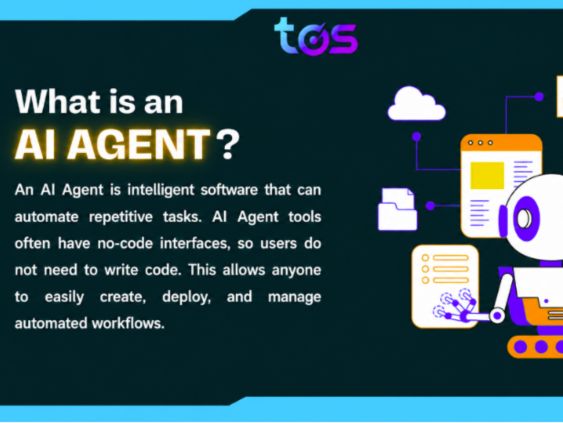
An AI agent is an automated system or software based on artificial intelligence, designed to proactively perceive its surroundings, make decisions independently, and perform actions to achieve specific predetermined goals. Fundamentally different from traditional automation tools that simply execute pre-programmed commands, modern AI agents typically integrate various AI models as their “brain” to understand, reason, and process complex tasks. They also possess the ability to continuously learn, improve themselves, operate more flexibly, and solve problems more effectively.
Characteristics of AI Agents:
- Autonomy: AI agents are capable of working independently, making decisions on their own without constant human intervention. This means an AI agent can choose the most appropriate course of action to complete its assigned task.
- Perception: AI agents are capable of sensing and understanding their surroundings by receiving and processing a variety of input data sources, from text, images, and sound, to data from physical sensors if the AI agent is a robot.
- Action: After understanding the situation and processing the collected information, the AI Agent is capable of performing specific tasks. These actions aim to create change in the environment or to achieve the stated goals.
- Goal-Oriented: Everything the AI Agent does is purposeful, aimed at one or more predetermined goals, rather than acting randomly. Each action is calculated to serve a clear purpose.
Through interacting with the environment, processing new data, and receiving feedback from action results, AI agents can improve themselves, becoming increasingly intelligent and efficient in performing tasks. This is what creates the difference and enormous potential of AI agents compared to traditional automation tools.

Basic characteristics of AI Agents
II. Basic Components of an AI Agent
For an AI agent to operate smoothly and deliver optimal results, the harmonious combination of many components is essential. Below are the core elements that make up a complete and intelligent “AI assistant”:
- Sensors: These are considered the “senses” of the AI Agent, responsible for collecting data from the surrounding environment. This data is diverse, ranging from text, images, and audio to data from APIs (Application Programming Interfaces) of other software or physical sensors if it’s a robot (e.g., cameras for self-driving cars, microphones for voice assistants).
- Processors & Models: These are the brains of the AI Agent. Large Language Models (LLMs), neural networks, and complex machine learning algorithms play a key role in analyzing data, inferring logic, and ultimately making decisions about the next course of action.
- Memory: AI agents need memory to store knowledge, current state, interaction history, and operating rules. Memory helps AI agents make decisions based on experience and context, and supports continuous learning and improvement.
- Actuators: Once a decision has been made, the actuators are the components that enable the AI agent to act and interact with the environment. For example, an AI agent might send emails, display information on a screen, or control a robot’s motor.
- Tools: Tools help AI Agents expand their capabilities by accessing the Internet to search for the latest information, using APIs to interact and exchange data with other software systems (e.g., CRM systems, data analytics tools), or using RAG (Retrieval Augmented Generation) systems to query and utilize information from specialized knowledge bases, making the Agent’s responses and actions more accurate and up-to-date.
It is the seamless and synchronized coordination between these components that has created a complete AI Agent, capable of recognizing, thinking, executing tasks, and continuously learning in an impressive manner.
The fundamental elements that make up an AI Agent
III. Comparison of AI Agent with Popular AI Tools
In the context of today’s rapidly developing AI tools, a clear distinction between AI Agents, ChatGPT (or Large Language Models – LLMs in general), and traditional chatbots is essential. Although all involve artificial intelligence, each tool possesses unique characteristics and capabilities, serving different purposes. While LLMs act as the “brain” of language, and traditional chatbots are often limited by pre-set scripts, AI Agents are more autonomous entities capable of proactively acting and performing diverse and complex interactions.
To better understand this core difference, let’s look at the detailed comparison table below:

Comparison table of AI Agent with popular AI tools
IV. Operating Principles of AI Agents
Knowing the components of an AI agent is important, but to truly understand the power of this technology, we need to understand how AI agents think and act to solve complex problems. Their operation is based on an intelligent loop, a closed cycle that includes receiving requests, conducting in-depth analysis, building detailed plans, executing tasks, and continuously learning to improve.
To make it easier to understand, imagine the workflow of an AI Agent as a series of logical steps, triggered by user requests and aimed at achieving a set goal. This loop unfolds as follows:
Step 1: Receive the goal from the user.
Every AI Agent’s journey begins with receiving a specific request or goal set by the user. This request can vary widely, from a prompt (a command or detailed description of the requirement) such as “Analyze the main competitors of product X in market Y and suggest three groundbreaking marketing strategies,” to more long-term goals, such as “Increase the conversion rate of the sales website by 15% in the upcoming business quarter.” Clearly defining the input goal is crucial for the AI Agent to accurately orient and implement the next steps.
Step 2: Target decomposition
When faced with large-scale and complex objectives, AI Agents will not attempt to solve everything at once. Instead, they will automatically break down the large objective into smaller, more manageable, and more achievable subtasks. For example, with the competitor analysis requirement mentioned above, AI Agents can break it down into specific tasks such as: (1) Collecting and listing direct and indirect competitors; (2) Conducting detailed research on each competitor’s products/services, strengths, and weaknesses; (3) Analyzing their pricing strategies and promotional programs; (4) Evaluating their marketing and communication activities across channels. This objective breakdown makes the problem-solving process more systematic and minimizes the risk of omissions.
Step 3: Planning
This is the stage where the AI Agent demonstrates its thinking and reasoning abilities. Based on the list of subtasks identified in the previous step, the AI Agent will begin building a comprehensive action plan. This plan not only includes determining the optimal sequence for each step but also involves selecting the appropriate and necessary tools for each task. For example, to gather competitor information, the AI Agent might plan to use web scanning tools to analyze data, or it might choose a specialized data analysis library.
Step 4: Select and use the tool
Once the plan is clearly outlined, the AI Agent will activate the appropriate tools. At this point, the AI Agent can perform function calls (calling a specific function or feature of a software or API) to retrieve data from a CRM system API, search for updated information on the web using a search engine, or query an internal enterprise data store.
Step 5: Take action
After thorough preparation, the AI Agent will officially begin implementing the planned steps. The AI Agent will use the selected tools to sequentially execute each sub-task, ensuring a smooth and efficient process, aiming to achieve the overall goal.
Step 6: Self-assessment, learning, and adjustment
This is a crucial step demonstrating the intelligence of the AI Agent. After execution, the Agent collects feedback from the environment, which could be web search results, data returned from an API, or even direct user feedback. Next, the AI Agent compares the actual results achieved with the initial goal, self-assessing the effectiveness of the actions taken. If errors are detected or the results are not optimal, the AI Agent can self-correct or adjust the action plan for subsequent iterations. This process of interacting with the environment, learning from results, and self-improvement creates a key logical relationship, making the AI Agent increasingly intelligent and effective.

How AI Agents work
V. Core technological elements that enable AI Agent operation
For the AI Agent’s intelligent workflow to run smoothly and efficiently, it requires support from many robust technological foundations. Among these, data, large-scale model languages (LLMs), and advanced frameworks play an indispensable role, determining the capabilities and power of an AI Agent.
1. Data
Data can be likened to the essential fuel source for the operation of AI agents. The quality, diversity, and timeliness of input data directly affect the AI agent’s ability to learn, analyze, and ultimately make accurate decisions. Data provides the AI agent with a comprehensive picture of the operating environment, the specific context of the task, and all related factors. Thanks to this, the AI agent can truly understand the problem to be solved and propose the optimal solution.
For example, an AI agent supporting marketing needs data on customer behavior, purchase history, social media responses, and the performance of previous campaigns to personalize messaging or suggest suitable products. If the input data is incomplete or inaccurate, the AI agent’s decisions are unlikely to be as effective as expected.
2. The Large Language Model (LLM)
For many modern AI agents, especially those that need to interact with and process information using natural language, LLM (Learning and Learning) acts as a central hub. LLM equips AI agents with the ability to deeply understand user requests, no matter how complex or natural those requests are. Furthermore, LLM helps AI agents perform logical reasoning, grasp subtle nuances in the communication context, and thus choose the most appropriate response. Simply put, LLM allows AI agents to communicate and understand problems much like humans, creating intelligent and natural interactions and actions.
For example, when you ask an AI Agent with integrated LLM to plan a trip, the LLM will help the agent understand your desired destination, budget, personal preferences, and expected time, thereby suggesting a suitable itinerary, transportation, and activities.
3. Advanced techniques and frameworks
Besides data and LLM, to make AI agents increasingly intelligent, flexible, and capable of solving more complex problems, developers have continuously researched and created advanced techniques and frameworks. These are tools that help optimize and expand the capabilities of AI agents. Some notable techniques include:
- Retrieval Augmented Generation ( RAG ): Imagine a highly skilled LLM ( Level Learning Model ) whose knowledge is only up-to-date (the time the model is trained). RAG is like equipping that expert with a vast, constantly updated library or the ability to search for information on the internet in real time. Specifically, RAG allows the AI Agent to access and leverage external knowledge sources. These sources could be specialized databases, internal company documents, or the latest information on the web. Thanks to RAG, the AI Agent can provide more accurate answers about new events, specific company information, or in-depth knowledge that the original LLM was not trained in.
- Frameworks like ReAct (Reason + Act): ReAct is a prime example of a framework that helps AI agents seamlessly and effectively combine two crucial processes: thinking (including reasoning, situation analysis, and action planning) and acting (including using tools and interacting with the environment to execute the plan). Instead of simply thinking once and then acting, frameworks like ReAct allow AI agents to perform a series of alternating, repetitive thinking and action steps. This approach helps AI agents solve complex tasks more flexibly, adaptably, and efficiently, much like how humans typically handle problems in real life.
These technologies and techniques, while seemingly complex, are the core elements that enable AI agents not only to execute commands but also to think, learn, and act with increasing sophistication and efficiency, opening up countless potential applications in marketing and many other fields.
VI. Classification of AI Agents by Capabilities and Purpose
1. Simple Reflex Agents (AI Agents)
This is the most basic type of agent, operating based on predefined “if A happens, then do B” (condition-action) rules. This type of agent identifies the current situation and reacts immediately, without needing to remember history or consider long-term consequences. In marketing, a typical example is an automated system that sends welcome emails as soon as a new customer registers an account or displays a special offer pop-up when a user visits a specific product page on a website.
2. Model-Based Reflex Agents (AI Agents)
What sets this type of agent apart is its ability to maintain an internal “miniature model” of its surrounding environment. This allows it to understand environmental factors that current sensors might not directly detect. As a result, it can make more accurate decisions, especially useful in environments that are constantly changing. For example, in marketing, a customer support chatbot of this type could recall recent conversation content to provide a more coherent and personalized follow-up response, or a system could suggest related products based on items a customer has recently viewed or added to their shopping cart.
3. Goal-Based AI Agents
These agents are programmed with one or more specific goals to achieve. They don’t simply react to the environment but are capable of independently planning and selecting the most optimal sequence of actions to accomplish their defined goals. A typical marketing application is when an AI agent is tasked with increasing the conversion rate of a landing page. This agent can automatically experiment with different headline versions, call-to-action (CTA) buttons, or page layout changes to find the most effective solution.
4. Utility-Based AI Agents
This is an advanced version of a goal-based agent. They not only strive to achieve a goal but also to maximize a certain “benefit function.” This benefit function could be customer satisfaction, revenue, or cost-effectiveness. They can compare different states and choose the action that will lead to the state with the highest benefit. In marketing, this can be seen in an automated agent that optimizes bidding for online advertising campaigns (such as Google Ads or Facebook Ads) to achieve the best return on investment (ROI).
5. AI Learning Agents
These are the most powerful and flexible types of agents, capable of self-improving performance through real-world experience and data collected from the environment. Inside these agents is a specialized “learning component,” allowing them to acquire new knowledge and automatically adjust their behavior to perform better over time. Many familiar virtual assistants like Amazon Alexa, Google Assistant, and Siri integrate these powerful learning elements, helping them better understand user habits and needs over time. In marketing, a personalized email system can learn from users’ email open rates and click-through rates. Based on this, the system will automatically adjust to send more relevant content, subject lines, or choose the most appropriate sending times for specific customer groups.

Classify AI Agents by Capabilities and Purpose
VII. Types of AI Agents
When it comes to AI Agents, many people often picture intelligent computer programs or applications. This is true, but not entirely accurate. AI Agents are not limited to intelligent software; they exist in many different forms, depending on the operating environment and specific goals.
- Software Agents: This is the most common type of AI agent. These are computer programs designed to run on familiar electronic devices such as personal computers, smartphones, or operate within the vast internet environment. Typical examples of this type of agent include personal virtual assistants (Siri, Google Assistant), automated trading bots in financial markets, web crawlers (agents that collect data from websites), or even AI agents that control characters in video games, providing a more intelligent interactive experience.
- Robotic Agents: This type of agent is integrated into robots, enabling them to be autonomous and interact directly with the physical world. Physical sensors (cameras, lidar, proximity sensors) help them perceive their environment, and mechanical parts (robotic arms, wheels) allow them to act. Common examples include autonomous robots transporting goods in smart warehouses, self-driving cars, and unmanned aerial vehicles (drones).
- Hybrid Agents: These are a harmonious combination of software and physical elements. In this case, a central software component acts as the “brain,” collecting data from physical sensors (e.g., temperature and light sensors) and then issuing commands to control other physical devices (such as turning lights on/off or adjusting air conditioning temperature).
Whether AI agents exist in the form of a software program, a robotic machine, or a combination of both, their core essence remains unchanged. This includes the ability to operate autonomously, the capacity to perceive and understand their surroundings, the ability to perform actions to achieve predetermined goals, and, most importantly, the ability to continuously learn and become more sophisticated and intelligent.
VII. AI Agent: A Breakthrough Tool Reshaping the Marketing and Branding Industry
The involvement of AI agents in the field of marketing is not simply a fleeting technological trend. This technology is steadily establishing itself as a strategic tool, offering the power to fundamentally change how marketing professionals approach and implement all activities. From understanding customers and creating engaging content to optimizing every small detail in campaigns, AI agents promise to create a true revolution, impacting the very roots of marketing and brand building.
1. Gain a deeper understanding of your customers through automated insight analysis.
The foundation of any effective marketing campaign is a deep understanding of the customer. AI agents are ushering in a new era in this by automating the process of collecting and analyzing customer data from a multitude of sources, including CRM systems, website analytics tools, social media platforms, online survey results, and even chatbot conversations.
Thanks to the application of Natural Language Processing (NLP) technology, AI agents can read and understand thousands, even millions, of responses and reviews, thereby analyzing sentiment, identifying prominent topics, and building a 360-degree customer profile. This helps marketers gain insightful, data-driven perspectives on the real market demand for products or emerging market trends. This is not just an assumption or premise for marketing campaigns, but also valuable information that helps guide strategies more accurately and effectively than ever before.
2. Personalize the customer experience on a large scale.
In a world where consumers increasingly expect personalized interactions, AI Agents are emerging as a powerful solution to help marketers achieve this on an unprecedented scale. AI Agents can automatically tailor communication content—from text and images to special offers—across channels like email marketing, online advertising, and website content to best suit each individual. This personalization is based on detailed profiles, purchase history, online behavior, and interaction context—not just at each touchpoint but throughout the entire customer journey, helping businesses build deeper relationships with customers, enhance engagement, and drive conversion rates effectively.
3. Automate your marketing campaigns intelligently and comprehensively.
AI agents are gradually becoming powerful “virtual campaign managers,” capable of planning, implementing, monitoring, and optimizing complex marketing campaigns across multiple channels. Imagine an AI agent automatically and intelligently bidding on individual keywords or ad audiences based on real-time performance data analysis to maximize ROI. The agent can also automatically allocate budgets flexibly and efficiently across different channels (e.g., Google Ads, Facebook Ads, LinkedIn Ads), and even automatically pause or adjust ads that aren’t performing as expected.
Beyond advertising, AI agents can handle complex SEO tasks such as analyzing competitive keywords, suggesting potential content topics, monitoring keyword rankings, and recommending necessary on-page optimizations. In content marketing, they can assist with scheduling automated posts across platforms, distributing content to appropriate channels, and tracking engagement. For social media marketing, AI agents can help automatically respond to frequently asked comments or messages, schedule posts, and monitor brand-related discussions. This intelligent automation frees up time, improves accuracy, and enhances the effectiveness of marketing activities.

AI agents can help automatically reply to frequently asked comments or messages.
4. Create groundbreaking content with AI Agent
The field of content creation, which traditionally requires a significant human element, is also being impressively boosted by AI agents, particularly generative AI tools. AI agents can act as researchers, quickly analyzing keyword trends, trending topics on social media, and user behavior data to suggest fresh and potentially engaging content ideas. Once ideas are formed, they can assist in outlining detailed content for blog posts, video scripts, or email content.
In campaigns requiring A/B testing (comparing two versions to find the more effective one), AI agents can quickly generate multiple variations of content, such as email subject lines, product descriptions, or calls to action, saving marketers time and effort.
Specifically, in optimizing SEO-friendly content, AI agents can analyze and suggest long-tail keywords and related semantic keywords, making content richer and easier for search engines to understand and rank higher. They can also assist in checking keyword density, article structure, and other on-page SEO factors. The combination of human creativity and strategic thinking with the processing and generational power of AI agents promises to bring new breakthroughs in how we create and distribute content.
5. Accurately measure and optimize campaign effectiveness.
A successful marketing campaign isn’t just about implementation; it requires continuous monitoring, measurement, and optimization. AI Agents offer superior accuracy and speed in analyzing campaign performance. They can automatically collect and aggregate performance data from various sources such as Google Analytics, Facebook Ads Manager, CRM systems, and other marketing tools in real time, then present it in intuitive, easy-to-understand reports. More importantly, with their deep analytics and machine learning capabilities, AI Agents can predict future performance trends and automatically suggest or even implement necessary adjustments. This helps marketers make more informed decisions, ensuring every dollar spent is effective.

AI Agents can automatically collect and aggregate performance data from various sources.
IX. Some Notable Case Studies of AI Agents
1. Starbucks: Personalized offers, increased revenue.
- Background: Starbucks faces the challenge of how to enhance customer engagement and boost sales through its mobile app. Sending mass, unpersonalized promotions is no longer effective.
- AI Agent Application: This brand has developed an advanced AI system, incorporating many model-based and learning-based AI Agent elements, called Digital Flywheel. This system performs in-depth analysis of transaction data from millions of customers, including factors such as frequently purchased products, preferred purchase times, and visit frequency. Based on this, Digital Flywheel creates highly personalized offers. Each customer receives unique challenges, interactive games, or promotions directly within the app, encouraging them to explore new products or increase their purchase frequency.
- Results: This system has contributed significantly to the growth of mobile channel revenue as well as the success of the Starbucks Rewards loyalty program. Reports indicate that personalized offers have a significantly higher customer engagement and participation rate compared to previous mass promotions.
- The takeaway: The power of AI in analyzing customer data at scale, combined with the ability to automate personalized offers, can create direct and positive impacts on revenue and build lasting customer loyalty.
2. Netflix: Optimizing content recommendations to effectively retain users.
- Context: With a massive library of countless movies and TV shows, Netflix’s biggest challenge is retaining users by making it easy for them to find content they truly enjoy and want to watch.
AI Agent Application: Netflix’s content recommendation system is a prime example of a learning and interest-based AI agent. This system continuously analyzes each user’s viewing history, including the time spent on content, preferred genres, ratings, and even keywords searched. From this, Netflix builds an incredibly detailed preference profile for each individual. Based on this profile, the AI agent automatically organizes and displays highly personalized content recommendations directly on each user’s home screen.
Result: According to Netflix’s own data, approximately 80% of total viewing hours on their platform come from recommendations provided by the AI system. This figure clearly demonstrates the superior effectiveness of personalization in retaining users and increasing their interaction time with the service.
The takeaway: AI agents can be the golden key to solving the information overload problem that users often face. By providing relevant and timely content suggestions, businesses can significantly enhance the user experience and the value they perceive from the service.
3. Sephora: A virtual beauty consultant that boosts online shopping.
- Context: Choosing the right makeup products can be a challenging experience for many customers, especially when shopping online without direct consultation.
- AI Agent Application: Sephora has pioneered the deployment of intelligent virtual assistants and chatbots, integrating AI technology (operating similarly to model-based AI agents with learning elements) on both its website and mobile app. These tools leverage facial recognition and augmented reality (AR) technology to allow customers to virtually “try on” lipsticks, eyeshadows, and other makeup products directly on their devices. Additionally, the chatbot can offer product suggestions based on information about skin type, skin tone, and beauty preferences provided by customers after answering a few simple questions.
- Results: The application of these AI tools has helped Sephora significantly enhance customer engagement with the brand, while reducing common barriers and hesitations in the online shopping process, thereby dramatically improving conversion rates. Customers feel more confident in making purchase decisions.
- The takeaway: AI agents can be creatively combined with other cutting-edge technologies like augmented reality (AR) to create unique interactive experiences and effectively address specific customer problems encountered during the shopping process. This not only enhances customer satisfaction but also directly boosts sales.
X. Conclusion
AI Agent technology is constantly developing and improving. In the not-too-distant future, AI Agents are predicted to transcend their role as mere support tools and become key factors, continuing to reshape the landscape of marketing and branding in ways we may not yet fully imagine.
The article above has demonstrated the superior ability of AI Agents to understand customers at a deeper level, thereby creating personalized experiences on a large scale. Furthermore, AI Agents act as the “brain” that automates complex marketing campaigns, supports the creation of groundbreaking content, and accurately measures and optimizes effectiveness down to the smallest detail.
While the benefits of this technology are undeniable, the deployment and operation of AI agents come with certain technical, cost, and ethical challenges. For Vietnamese businesses, proactively embracing, learning, and intelligently applying AI agents is not only a way to keep up with global trends but also a key to unlocking new potential and creating a sustainable competitive advantage.