


ictvietnam – Artificial intelligence (AI) is no longer a distant concept but is present in many applications serving daily life. In recent years, the media and entertainment (M&E) industry has applied AI to fundamentally change the customer’s video experience.
M&E is one of the industries with a high rate of digital innovation.
Today’s customers have increasingly high demands and expectations. Tech companies like Netflix, Amazon, Facebook, Apple, Google, and ByteDance provide engaging, captivating, and personalized experiences as users watch videos in context, instantly, and at any time.
M&E companies must gain deep customer insights from the vast amounts of big data they collect. Using data analytics tools combined with cognitive technology, a sub-branch of AI, they can better understand their customers and adapt more precisely to their interests and relevant content at the right time, with a higher degree of personalization than previous technologies.
According to a survey by Russell Reynolds Associates of over 2,000 executives on the impact, structure, and barriers of digital transformation across 15 industries, the M&E (Mechanical and Electrical) sector is one of the industries experiencing a high level of digital disruption compared to others.
AI applications in M&E
Digital M&E companies like Netflix, Amazon (prime video), Google (YouTube), ByteDance (TikTok), and Apple (Apple TV) have applied AI to gain audience insights and predict and match content to deliver relevant content. These technology companies leverage cloud technology and AI for performance and scalability to manage massive content volumes and peak load, enabling multi-channel distribution across multiple devices and automating efficient workflows.
Back-end systems are being redesigned to optimize advertising revenue, content revenue, and reduce costs with digital versions.
AI, along with machine learning, addresses the challenges of over-the-top (OTT) apps, from encoding quality to generating automatic transcripts like those we see on YouTube. When streaming videos, one issue is that depending on the transmission environment, network speed, and the level of network congestion, the system will provide viewers with bit rates and resolutions ranging from standard definition (SD) to high definition (HD).
Adaptive bitrate (ABR) technology is applied to minimize buffering by switching bitrates as needed, and this is ensured by varying bandwidth. AI systems use machine learning to select different algorithms, such as rate-based algorithms and buffer-based algorithms, to adjust the speed or resolution of video streaming.
M&E companies like Netflix and YouTube use machine learning to dynamically optimize encoding parameters to improve quality of experience (QoE) and quality of service (QoS), reducing the number of bits required for the same quality. Recommender systems use AI technology to analyze personal data, making predictions and suggestions tailored to user preferences, saving time searching and making content access easier, while also helping businesses enhance customer experience.
Among the applications of AI in the M&E industry, video indexing technology, a sub-branch of cognitive technology, is indispensable and is widely applied in companies providing video services. The features of video indexing include, but are not limited to:
- Celebrity detection: Automatically detects the appearance of famous people in the video.
- Frequency detection: The length of time a character appears throughout the video.
- Related topics: Keywords or topics discussed.
- Emotion detection and sentiment analysis: To detect emotions expressed in speech, vocal cues, and facial expressions.
- Scene segmentation: To segment a video according to its semantic context.
- Transcript: Using speech-to-text technology, this provides the dialogue of the characters in the video and the timeline of their speech.
Platforms like Microsoft Azure Cognitive Services are leading the way in video indexing. The authors tested the Azure Video Indexer service by uploading a short clip on the topic of healthy living, utilizing the second law of thermodynamics and the concept of entropy. The results were quite impressive.
Azure Video Indexer portal interface (Source: Azure Video Indexer – Microsoft)
Four people were spotted in the clip, with the author (Unknown #1) appearing for approximately 92% of the time. The video covers topics such as health and well-being/healthy living/healthy eating, physics (entropy), science/the second law of thermodynamics.
Happy emotions occupy 20% of the time and are present in 3 scenes:
Sentiment and scene analysis (Source: Azure Video Indexer – Microsoft)
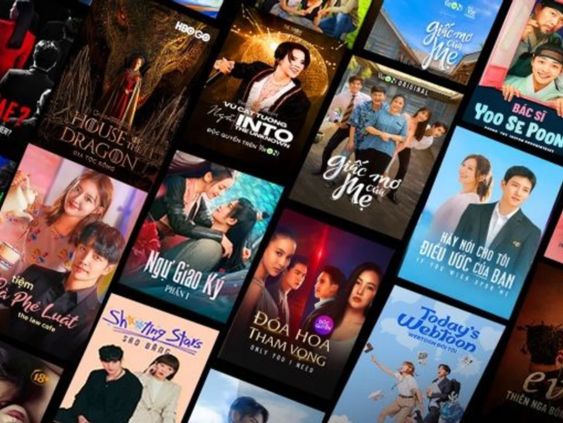
Currently in Vietnam, the entertainment super app VieON (vieon.vn), developed by DatVietVAC, is rapidly growing by focusing on its technology platform. According to the latest report from Samsung, VieON is the number one most popular app in Vietnam and the top four globally. VieON – an OTT platform – boasts many convenient features, attractive exclusive programs, and a cutting-edge technological experience.
VieON’s video indexing feature (source: DatVietVAC)
VieON has developed its own video indexing system capable of analyzing video content using AI. The VieON app allows for in-depth searching and extraction of frames and clips based on identified information such as the presence of characters, artists, the setting, and the characters’ expressions.
Video indexing by VieON (Source: DatVietVAC)
To deliver consistent content quality across devices, VieON’s platform utilizes the most advanced compression algorithms and packaging protocols such as HEVC and CMAF. Furthermore, the company continuously invests in its content transmission infrastructure with a system of 9 data centers nationwide capable of serving millions of viewers simultaneously. On the other hand, videos designed using NVIDIA technology enable VieON to process and deliver hundreds of hours of content to viewers every day.
Furthermore, VieON is a media and entertainment technology product that has been meticulously invested in and developed entirely by a team of Vietnamese engineers.
VieON was awarded the Vietnam Digital Transformation Award 2022.
The VieON super app, launched on June 15, 2020, has consistently received prestigious awards both domestically and internationally: the Asia Technology Excellence Award 2021-2022; the Vietnam Digital Transformation Award 2022; and the Inspirational Brand award within the framework of the Asia Business Excellence Award 2022.