


I. Consumers increasingly expect omnichannel and fully personalized experiences.
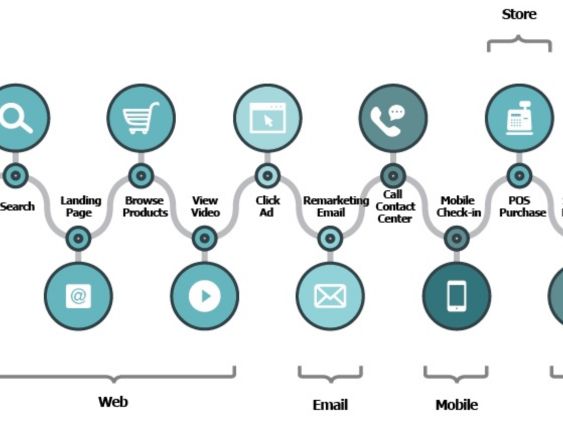
Today’s automotive customer journey moves back and forth across multiple channels (online ↔ offline) and requires a seamless experience between channels:
- 92% of consumers search for information online during the purchasing process (Think with Google, 2025)
- Customers still value the direct experience, with 90% of Southeast Asians “need to test drive a car to be sure,” and 80% want to establish a relationship with the dealership for long-term support (Deloitte, 2025).
Furthermore, according to McKinsey, 71% of consumers expect brands to provide personalized experiences, and 76% are disappointed when that need is not met. Deloitte’s Global Automotive Study 2025 report also shows:
- 87% of Indians, 80% of Chinese, and 74% of Southeast Asians are willing to pay extra for personalized services (even if it means sharing personal data).
- At the same time, most buyers still trust automakers to manage vehicle data, facilitating OEMs in implementing personalization strategies.

Data on modern automotive consumer behavior.
Data sources: McKinsey, Deloitte, Think with Google (2025)
Therefore, implementing an omnichannel marketing journey has become a key focus in the strategy of every automotive brand, and the core key to understanding each touchpoint in that omnichannel journey is personalization – the complete personalization of the experience .
II. Methods for Implementing Personalized Omnichannel Marketing in the Automotive Industry
According to McKinsey (2025), businesses pioneering personalization are generating 40% faster revenue growth and 30% higher profit margins than the rest — largely thanks to their ability to transform customer data into “tailor-made” experiences for each user. Leading global automotive brands are systematically approaching personalization, based on two main pillars:
- Personalize content and interactions based on behavioral data.
- Integrated and automated Omnichannel Marketing system
1. Personalize content and interactions based on customer behavior data.
The foundation of personalization lies in the ability to collect, integrate, and process data on consumer behavior and intents . Unlike traditional demographic approaches, businesses are now using technology to identify key “Moments of Truth,” predict behavior, and systematize data on multi-touch interactions with customers.
The next step is to transform data into insights, and insights into a truly personalized experience . Personalization isn’t just about including the customer’s name in emails or marketing messages, but about customizing the entire experience (Brand Experience) according to the behavior and stage of the car buying journey based on:
- Dynamic content and overlays ads (personalized): Content displayed on a website or app changes based on user behavior.
- AI-driven recommendations: The system suggests suitable products, vehicle models, or financing offers.
- Behavioral triggers: These trigger actions based on behavioral signals, for example, when a customer is about to leave a page or views a particular car model multiple times.
2. Integrating multi-channel journeys: When experience becomes a brand asset.
The second pillar, and also the biggest challenge, lies in the ability to integrate the customer experience seamlessly .
In many businesses, online behavioral data (such as car views, quote requests) is often used only for marketing, while data from dealerships (such as test drive feedback, financing needs, and order closing status) is not fed back into the marketing system for optimization.
Brands can overcome this situation with a two-way data loop :
- Marketing sends prospect data to dealerships along with specific behavioral context (e.g., “viewed the hybrid model three times, interested in installment plans”).
- After the dealership contacts the customer, the interaction results (test drive completed, no response, purchase postponed, purchased a different vehicle) are updated back to the marketing system to adjust the campaign and communication message.
III. Case studies from pioneering brands
1. TOYOTA – Personalized Omnichannel helps increase lead conversion rates by 360%.
Background
Despite consistently high traffic to its official website, Toyota has struggled to redirect visitors to second- and third-tier dealerships. This was due to a lack of technological capability to integrate campaigns across different channels.
Specifically, when users leave the official website without visiting the dealer’s page, the brand is almost unable to continue interacting with them on other digital touchpoints such as email, display ads, or social media.
Furthermore, even after potential customers visit the dealership’s website or showroom, Toyota cannot accurately identify the conversion channel (attribution) and assess the overall effectiveness of its marketing efforts. Dealerships also fail to leverage data from their internal sales management system (DMS) for remarketing, resulting in a fragmented and unpersonalized car buying experience.

TOYOTA – Personalized Omnichannel leads increase in conversion rates by 360%.
Source: Zeta Global
Solution
Recognizing that these limitations were hindering its growth targets, Toyota understood that it needed a complete transformation in its marketing approach – from a fragmented, channel-by-channel model to an integrated, personalized system tailored to the customer journey.
Toyota is partnering with Zeta Global, using an AI-driven marketing platform for multi-channel coordination:
- Link anonymous customer data from the web with existing profiles, then use personalized retargeting via email, display ads, and social media to drive customers to the agency.
- Integrate data from the agency management system (DMS) and online behavior to understand which stage of the customer journey they are in.
- Thanks to this, dealerships can send advertisements and emails introducing the specific car models that customers are interested in (including trade-in programs or internal promotions) in a highly personalized manner.
Result
- Toyota reported an 87% increase in click-through rate (CTR) on its marketing messages and a 360% increase in lead conversion rates compared to before.
- This resounding success led Toyota to decide to expand the campaign into an always-on personalization strategy.
2. GAC – “Where Craft meets technology”: Optimizing customer experience through personalization and automation.
Background
Entering the market with a premium gasoline vehicle positioning, GAC Motor faced numerous challenges in reaching potential customers due to strong prejudices regarding origin and quality. Furthermore, Vietnamese consumers are both price-sensitive and demanding in terms of experience and after-sales service, while the brand’s previous lead management system was manual, with scattered data, leading to lost leads and slow response times.

GAC – “Where Craft meets technology”: Optimizing customer experience through personalization and automation.
Source: Novaon Digital
Solution
GAC Motor aims to build an automated lead collection, classification, and distribution system to increase response speed, track the entire customer journey, and improve sales performance.
The brand has partnered with Novaon Digital to implement OnLead Management – enabling GAC Motor to automatically collect real-time lead data from Paid Media, Owned Media, chatbots, social media, and websites, centralizing it into a single MiniCRM.
- The system automatically checks for duplicates, filters quality, intelligently categorizes leads by vehicle type, needs, and region, and then instantly allocates leads to the appropriate sales team.
- A key feature is the lead quality tracking and scoring system, which helps sales and customer service teams personalize customer consultations and care.
- In addition, OnLead synchronizes data bidirectionally with CRM and Meta Conversion API, helping to optimize advertising budgets while tracking the entire customer journey, identifying bottlenecks to effectively reinvest in performing channels.
Result
- GAC Motor collected over 1,667 leads , including 800 high-quality leads, achieving sales of 89 vehicles, confirming the effectiveness of its lead management strategy even during the brand’s initial market entry phase.
- Lead processing time has also been shortened to just 5-10 minutes per step, helping GAC Motor build a modern, professional brand image and create a solid foundation for sustainable growth in Vietnam.
IV. Expert Opinions from Novaon Digital
Personalized Omnichannel Marketing is not just about technology; it’s a comprehensive strategic challenge encompassing data, creativity, and the customer’s brand experience.
Therefore, automotive brands need to create personalized messaging at every touchpoint, accurately reflecting the behavior, needs, and emotions of each customer group at every stage of the buying journey. Brands also need to standardize data processes between marketing, sales, and dealerships, ensuring that all customer feedback is returned to the system to optimize campaigns.
Understanding this reality, Novaon Digital proudly offers a comprehensive brand experience solution ecosystem, combining Strategy, Creative, and Technology capabilities . Beyond supporting automation and lead management with OnLead and personalized multi-channel communication through OnMarketer , Novaon Digital helps car manufacturers tell their brand story and deliver tailor-made communication messages to each individual car buyer – with the right insights and at the right time.
V. Conclusion
Personalization is reshaping the competitive landscape of the automotive industry, as data, innovation, and experience merge. Brands today need to be aggressive in their digital transformation, adopting martech technologies to unlock the potential of building personalized omnichannel marketing journeys.
When automotive brands and dealerships operate together on a unified data journey and a comprehensive, personalized Brand Experience strategy , brands not only improve sales but also win the trust and emotional connection of each car buyer throughout the ownership lifecycle.