



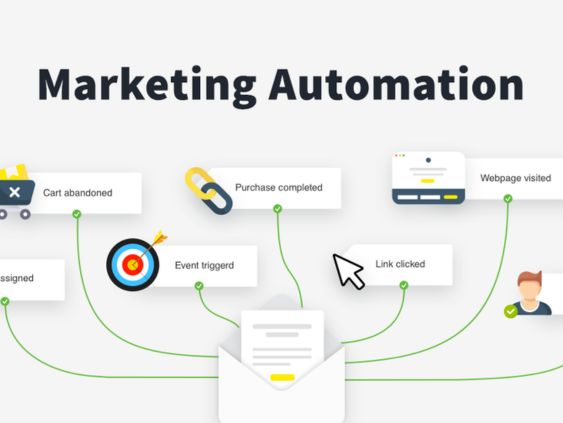
Marketing automation is the process of leveraging software to automate repetitive tasks. In addition, marketers use this tool to foster customer loyalty by integrating it with customer relationship management (CRM) software and customer data platform (CDP) software.
They also use these platforms to automate and personalize marketing messages and content. Bloomreach, a provider of digital experience platforms (DXP), acquired Exponea in December 2020 (Exponea is a company that provides marketing automation and CDP integrations).
The largest acquisition of a marketing automation provider occurred in 2018 when Adobe acquired marketing automation service provider Marketo for $4.75 billion. According to a 2020 report by ResearchAndMarkets.com, the global marketing automation market is projected to reach $8.42 billion by 2027, expanding at a compound annual growth rate (CAGR) of 9.8% from 2020 to 2027.
Vision for Marketing Automation
Marketing automation refers to tools that help advertisers run campaigns more effectively, generating more revenue with a better return on investment (ROAS). In theory, automation automates advertising tasks, but overuse is not advisable without proper training, strategy, and execution.
A simple example of marketing automation is: An automated email is sent to users based on behavioral triggers pre-configured by marketers on a marketing automation platform.
At a higher level, automation can help businesses send emails to customers reminding them of forgotten items in their shopping carts, recommending special offers based on interests and preferences, and more. Marketing automation helps companies increase efficiency, sales, and customer engagement in a more personalized way, while also creating a foundation for revenue growth.
Qualified potential customers
Let’s return to the pure practice of Marketing Automation. The ultimate goal you want to achieve after using this tool is to increase conversions, generate qualified leads, and market on a large scale with personalized messages. Qualified leads are a key element of the great combination of marketing and sales. They can help perfect sales funnels and provide better experiences for salespeople who want to have meaningful and effective conversations with potential customers.
According to Jasmine Chung, director of demand generation at Openprise , marketing automation helps attract qualified leads in several ways:
- Use a scoring model to track business behavior and demographic/characteristic information.
- Create landing pages that function as part of the main website.
- Dynamic content places a strong emphasis on personalization.
Sending the right messages to the right potential customers at the right time is key to driving conversions and increasing sales. It helps them connect with existing customers on a deeper level.
The collaboration between Sales and Marketing
The prospect of marketing automation tools is direct collaboration between marketing and sales. To varying degrees, automation helps link sales and marketing because it creates service-level agreements and overall processes regarding the strategies you will implement to ensure consistency.
Marketing automation streamlines the sales funnel and makes it easier for sales and marketing teams to generate leads and convert them into actual customers.
Features of Marketing Automation
Some key features of a marketing automation platform include:
- Lead nurturing: This is the process of sending a series of automated emails to attract potential customers by providing relevant information.
- Personalized email marketing : Personalizing emails helps businesses develop better relationships with their customers.
- Campaign management: Companies can run email campaigns to nurture leads throughout the sales cycle. It allows teams to send direct and personalized emails to a large number of customers.
- CRM integration: This allows businesses to transfer potential customer information back and forth between marketing and sales.
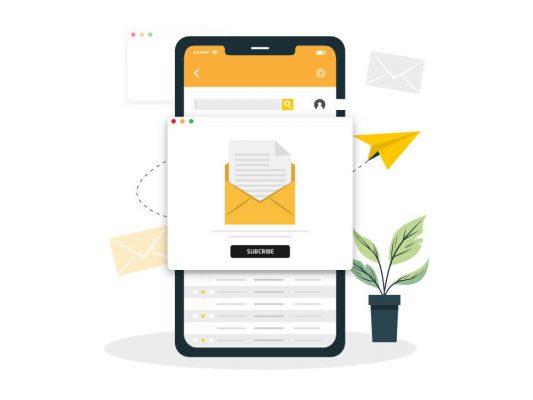 Figure 1: Implementing email marketing with automation
Marketing automation features can be broadly summarized as follows:
- Forms and landing pages : These are tools that allow you to capture information from potential customers and then send that information to various systems for storage and/or action.
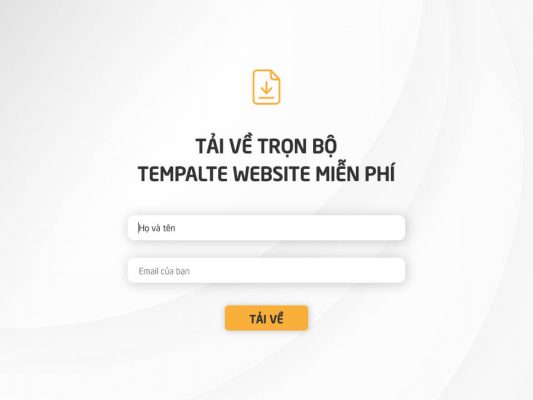 Figure 2: Collecting customer information using a form
- Lead scoring: This is an integral part of all marketing automation and email platforms. Many more advanced solutions are moving beyond scoring based on the outcome of activities (visits, opens, clicks, etc.) and scoring based on perceived intent and/or purchase stage.
- Lead management: According to Yield, some marketing automation platforms act as a destination for potential customers when there isn’t enough information to pass on to sales.
- Social media management: Allows content distribution across most major social media platforms in one place.
The difference between Marketing Automation and CRM
Marketing automation and CRM work together but perform different functions. Marketing automation typically follows a “top-of-funnel” approach to drive qualified leads toward sales. CRM, on the other hand, stores information about leads and their position in the sales cycle. There’s a symbiotic relationship between marketing automation and CRM, meaning that using a data orchestration solution or other tools to ensure only clean data flows between the marketing automation and CRM systems is crucial.
Integrating popular marketing automation
Marketing automation can be integrated with hundreds of different potential applications. Besides CRM, one of the most popular integration types is with webinar applications to boost engagement. Many webinars offer a setup package that connects to the marketing automation platform and makes it accessible to engagement data, because someone who participates in the webinar for an extended period of time will have a higher level of engagement than someone who registered but did not attend.
In addition, integrating marketing automation with chat platforms is also very common through APIs.
Good Marketing Automation Practices
A prime example of marketing automation is tracking how someone first visits your website (referral source), then where they convert (e.g., the first form they fill out or their interaction with your chatbot), and then coordinating how, when, and what types of marketing and sales messages are subsequently delivered to engage potential customers in making a decision.
With data from campaign automation, marketing can generate reports to measure effectiveness and analyze which campaigns are having the greatest impact on revenue, which referral sources are driving the most website traffic, and so on.
Before marketing automation, marketers relied on IT knowledge to write email code, build landing pages, and mass email campaigns. Marketing automation empowers marketers, making these tasks faster and easier, thereby saving time and money.
Effective marketing automation is like a well-organized space where you can easily find and locate what you need in a carefully curated database, with smoothly running workflows. Marketing automation helps streamline processes, fosters customer loyalty, and drives conversions from potential customers. This builds trust in the sales team’s data and motivates the marketing department.
Does “bad marketing automation” exist?
The true value of marketing automation lies in the data. The worst part of marketing automation is that marketers rarely receive the necessary training to effectively manage, manipulate, and utilize that data.
“All the training that marketers receive in school largely revolves around the 4Ps (price, product, promotion, place) rather than data management. All the best features of marketing automation are data-driven, but marketers rarely learn about it. So, even if marketers have sufficient knowledge and skills in best data practices, they end up messing up the entire process and going against what marketing automation is supposed to achieve.”
Poor marketing automation can ruin a marketing campaign. It’s a well-known fact that ‘wrong data leads to wrong decisions’ (garbage in/garbage out). However, there are ways to minimize the influx of junk data into a marketing automation system, including using progress profiles to collect additional information repeatedly and employing data orchestration solutions to automate the data cleaning process.
B2B versus B2C
Marketing automation tools often included with B2C (Mailchimp) are more commonly used than those for B2B (Oracle-Eloqua). These tools primarily help you summarize the number of emails you need to send daily/weekly and the timeliness of those emails.
Therefore, in the B2B world, most of the emails we send don’t really have the same timeliness element as B2C emails. For example, many B2C companies often send coupons that expire after 24 hours or some level of urgency requiring action. You need a system to deploy those 10 million emails quickly, or you’ll really anger your customers. The sending tool and its follow-through are what fundamentally differentiate B2C from B2B. A B2C company often calls its marketing automation an ESP (email service provider) instead of a full marketing automation system.
B2B businesses tend to use marketing automation platforms such as Pardot, HubSpot, Marketo, and Eloqua.
Additionally, these platforms can give you a significant competitive advantage if you use them to track the customer lifecycle. For example, if you’re planning to report on which campaigns are actually impacting a customer’s journey (attribution), from finding you to generating revenue.
B2B companies should choose marketing automation tools with lead management, nurturing, and scoring features. B2C businesses, on the other hand, need tools that can manage broader customer databases. B2C companies also require analytics and segmentation tools to identify target customers and thus acquire better leads.
Thus, after years of rapid development, Marketing Automation is gradually proving its effectiveness as a powerful assistant for marketers in marketing strategies in particular and advertising campaigns in general.