



Brand Identity
22 Minute
Creative is King — Why Creative for Performance is the Growth Engine of Modern Lead Generation


Over the past few years, as advertising platforms have shifted toward AI, user behavior has become increasingly unpredictable, and the competitive landscape has grown fiercer by the day, one element has quietly reclaimed its position at the center of Lead Generation campaigns: Creative.
In an earlier era, creativity was a game driven by intuition — “it looks good,” “it fits the brand,” “it’s trending.” But in the AI era, creative is no longer just an artistic output — it is a data signal. It tells AI systems which users are likely to be interested, which segments are in the consideration phase, and who has a higher propensity to convert.
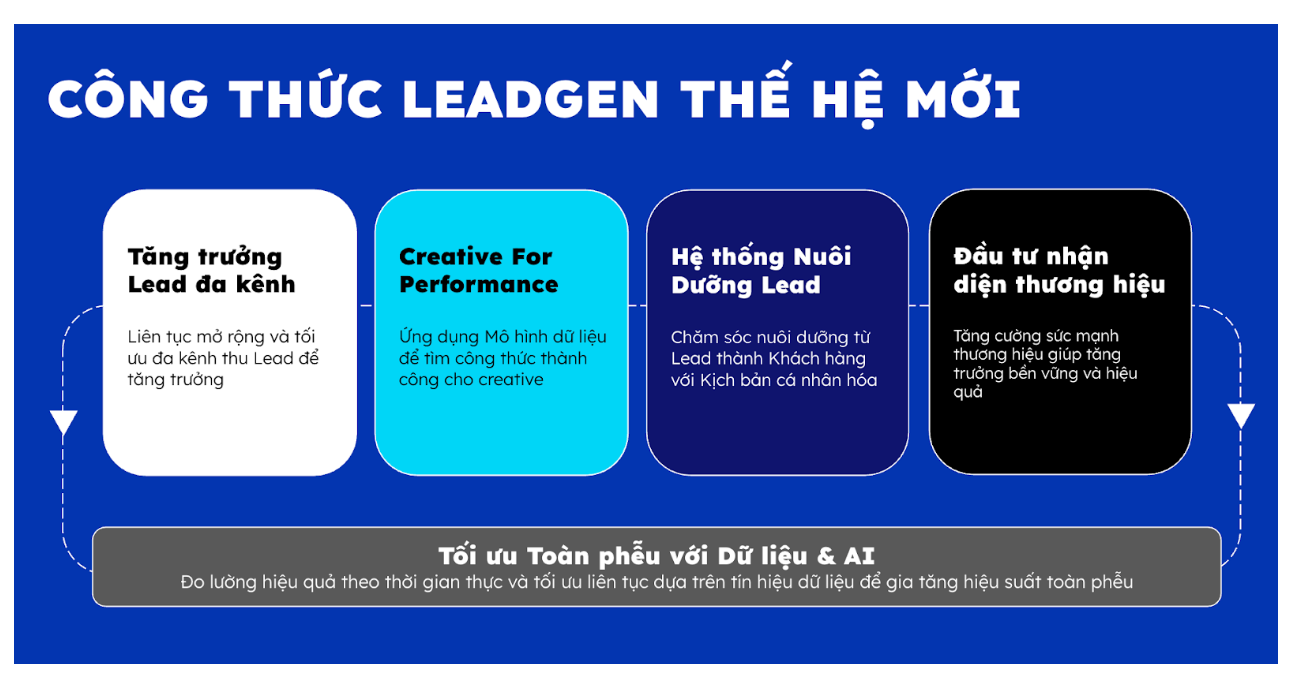
That is why this article takes a deep dive into the Creative landscape — and why the Creative for Performance (CFP) model is the leading answer for building a content production system that generates quality leads at scale.
Creative is King — The Unchanging Principle of Marketing
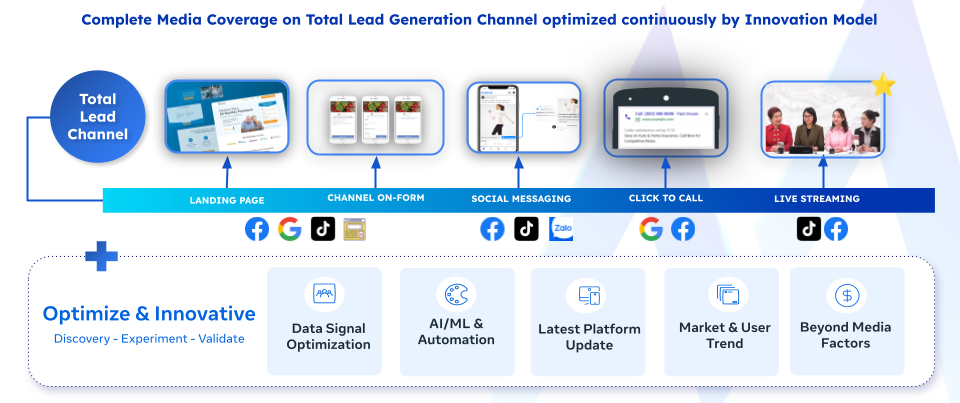
Even as technology, algorithms, and user behavior evolve, creative remains the decisive factor that makes a customer stop, engage, and ultimately take action. Today, the role of creative has been elevated to an entirely new level. With the rise of AI and Automation Campaigns, manual audience targeting is increasingly constrained. Google’s Performance Max, Meta’s Advantage+ Campaigns, and TikTok’s Smart Performance Campaign all use AI to automate budget allocation and targeting.
In this context, creative has become the primary targeting signal that AI systems use to identify the right potential customers. A visual, a headline, or a short video clip is essentially the “input data” that helps platforms understand who is likely to be interested and take action. Numerous reports from major platforms — Google, Meta, and others — have highlighted that creative elements account for 50% to 60% of a Lead Generation campaign’s performance outcomes.
Yet there is a truth rarely discussed: every creative will eventually “die.” An ad that initially achieves a high Click-Through Rate (CTR) and low Cost Per Action (CPA) will, after just days or weeks depending on the industry, see its performance decline due to repetition fatigue and audience desensitization. This forces marketers to continuously refresh their creative, sustaining the performance lifecycle by producing successor versions — ones that introduce novelty while building on previously proven elements.
The Big Problem with “Creativity” — Escaping the Intuition Trap
For many years, creative decisions were made on gut feeling: “this version looks visually appealing,” “this angle fits the brand,” “that color is trending.” The result was a cycle of endless trial and error: testing dozens of versions, waiting weeks for data, and hoping to land on something that “works.”
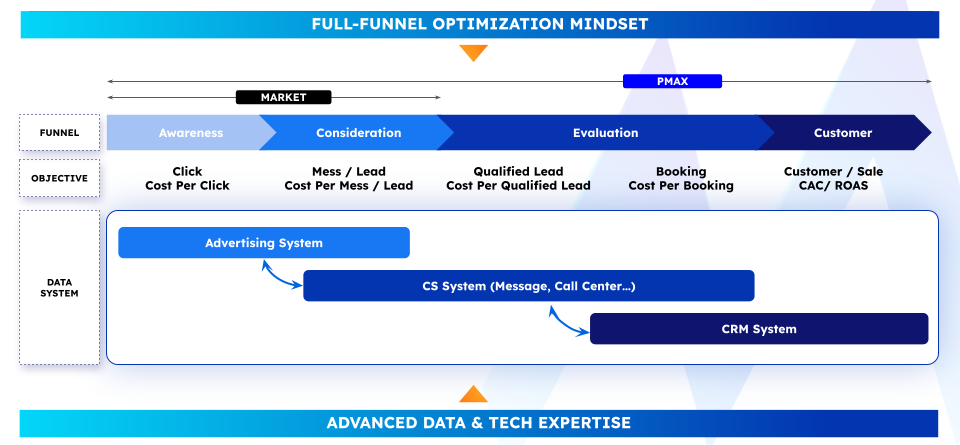
Today, marketers have developed sharper thinking around evaluating creative based on real business metrics in Lead Gen campaigns: CPL (Cost Per Lead), CPQL (Cost Per Qualified Lead), and CAC (Customer Acquisition Cost). However, the intuition trap still surfaces when it comes to creative optimization:
Even when we can measure the end result of each creative asset, we still do not know precisely which element inside the content drove that outcome — was it the visual, the headline, the tone of voice, or the CTA?
Without that certainty, replicating a successful creative by preserving the same layout, tone, or angle offers no guarantee that subsequent versions will perform just as well. That is why the creative process remains experimental and costly.
The consequence is a structural disconnect between Media and Creative: Media teams need data to optimize; Creative teams produce based on personal intuition. The two sides speak different languages, making it nearly impossible to build a coherent performance optimization system.
Creative for Performance — Where Creativity Meets Data
The Creative for Performance (CFP) solution is designed to close this blind spot. Every creative element — from headline and visual to angle and CTA — is tagged, standardized, and analyzed through data. Rather than making selections by instinct, each ad is deployed as a “micro-experiment,” generating valuable behavioral and response data. As a result, businesses do not just know which asset performed well — they know why it worked.
Creative for Performance (CFP) addresses two core challenges:
Identifying the success formula of past creative assets: Not just knowing which asset performed, but understanding exactly why — which headline, angle, or visual was driving real impact. This is achieved through high-confidence mathematical models that surface creative formulas with a higher probability of success.
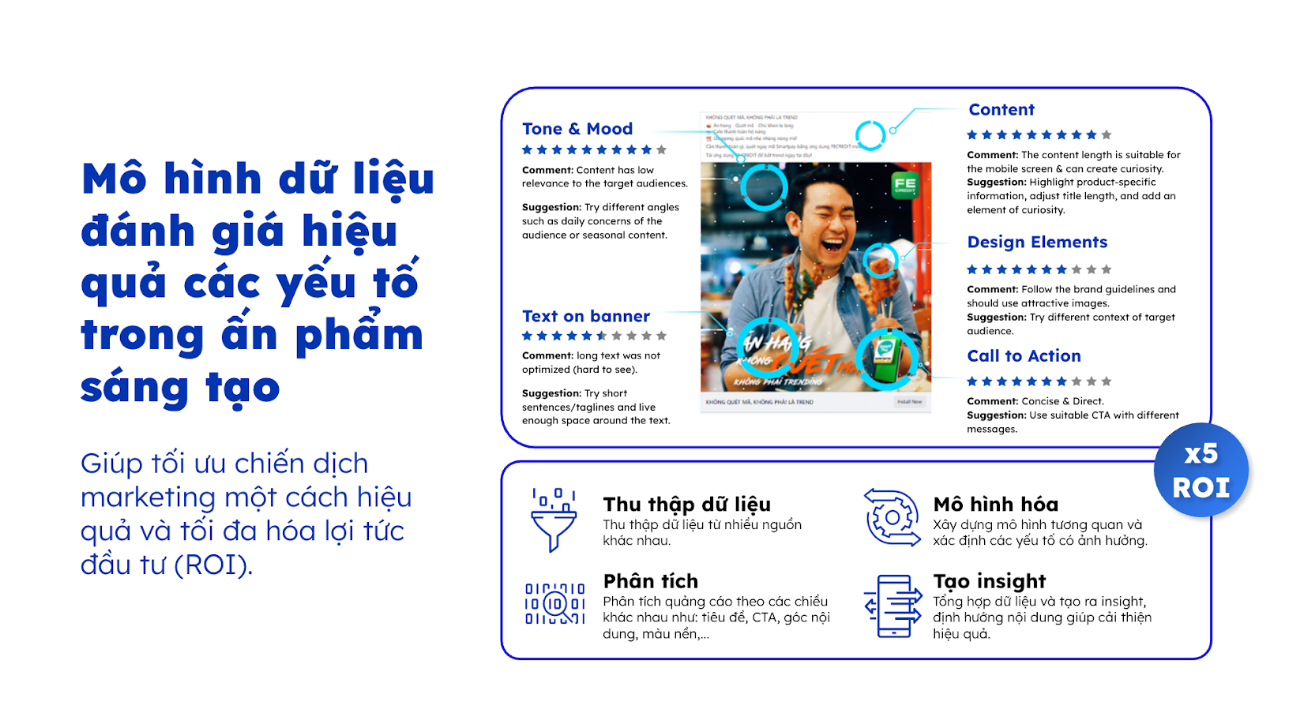
Enabling structured, insight-driven creative planning: CFP does not only analyze historical performance — it builds a data foundation that helps marketers plan more systematically: identifying which elements to retain and which to change; briefing new creative rounds with transparent data rather than guesswork; and reducing testing costs by pointing in the right direction from the ideation stage.
This opens a new operating model — one that unlocks the creative challenge in Lead Gen campaign execution and optimization:
- Accelerating production: Shortening the cycle from “trial and error” to “data-informed direction, higher-probability assets from day one.”
- Turning insight into leverage: Precisely identifying which elements reduce CPL and which drive conversion uplift.
- Unifying the language: Creating a shared data layer so Media and Creative teams operate within the same framework — instead of working in silos.
Endless Creativity — Explore, Test, and Distill
In an advertising environment that changes every day, no single creative formula stays relevant forever. Businesses must enter a continuous creative loop: exploring emerging trends, running controlled experiments, and distilling lessons through data. Only through this cycle can brands continuously surface new best practices, sustain long-term growth, and avoid being left behind.
A number of noteworthy creative trends are continuously emerging that marketers should begin testing immediately:
- UGC / Partnership Content: Content created by customers, KOCs, or KOLs — authentic in nature and high in trust-building.
- Short Video / Reels: Fast-paced short-form video that hooks viewers within the first 3–5 seconds, effective for both awareness and conversion.
- AI-Generated Content: Leveraging AI to rapidly produce multiple creative variants for idea-testing at low cost.
- Interactive Content: Mini-games, quizzes, and AR filters that invite direct participation, generating leads more organically.
- Livestream Snippets: Clipping highlights from live sessions for repurposing as ad creative, optimizing production costs.
When combined with Creative for Performance, businesses can do more than chase trends — they can understand which trends actually deliver results. This “Explore – Test – Analyze – Distill” loop is the only sustainable way to build a creative system that drives long-term growth rather than one-off wins.
Conclusion — Creative Is No Longer Intuitive Art. It Is a Growth Asset.
In modern Lead Generation, creative holds a critical role — not only in making a strong first impression, but in determining the targeting capability, distribution efficiency, and optimization potential of the entire advertising system. However, creativity only becomes a true competitive advantage when governed by data.
Creative for Performance is the model that transforms creativity from a “game of chance” into a “scientific system” — one where every content and creative element is tested, measured, and distilled to uncover genuine formulas for success. This is the competitive edge that businesses must proactively build starting now.